Skip to content

Kaspevo Labs is open for engagements

Mumbai, India

Engineering products from silicon to software

An engineering studio founded by engineers with experience in robotics startups, embedded Linux, custom hardware, AI and open-source systems.

Six domains, one system

  • Mainline Linux kernel
  • Apache NuttX upstream
  • GSoC 2026 · Linux Foundation
  • Safety-critical RTOS
  • 80+ boards fabricated

Work our engineers did before this studio existed, each backed by a source.

We didn't start with a company. We started by building.

Before Kaspevo Labs existed, our engineers were already contributing to open-source infrastructure, designing production electronics, bringing up embedded Linux platforms, and helping early-stage robotics and systems companies turn prototypes into products.

Kaspevo Labs is the natural next step — bringing those capabilities together into one engineering studio.

Four engineers who met while building robots.

  1. 20253 entries
    • Robotics control systems for an assistive-mobility platform.NishCorp Technologies

    • Ultra-wideband localization for autonomous vehicles operating where GPS is unreliable.Krishna Defence

    • Robotics and electronics on an early-stage robot.Eyecandy Robotics

  2. 20266 entries
    • Patches merged into the mainline Linux kernel.Linux Kernel

    • Board support upstreamed into Apache NuttX.Apache NuttX

    • Embedded Linux board bring-up on NXP i.MX95.Mecha

    • Formally verified, safety-critical RTOS across ARM64 and RISC-V.RedKill OS

    • LiDAR perception for Automotive Grade Linux, through Google Summer of Code.Google Summer of Code

    • Kaspevo Labs founded.

Capabilities, proven by experience.

Every domain below is backed by work that shipped, was measured, or was merged upstream. Nothing here is a tool we have read about.

01

Robotics Systems

Robotics platforms carried from prototype toward production.

  • SLAM and Nav2 autonomy in a GPS-denied environmentKrishna Defence
  • Autonomy and control on an early-stage robotEyecandy Robotics
  • Assistive-mobility platform, simulation to hardwareNishCorp Technologies
ros 2 · nav2 · slam
02

Embedded Linux

Board bring-up, BSP work, kernel debugging and upstream patches — what decides whether a board becomes a product.

  • NXP i.MX95 bring-up — display, camera, VPU, audioMecha
  • PocketBeagle 2 (AM62x) board support upstreamedApache NuttX
board bring-up · device tree · drivers
03

Custom Electronics

Production boards: multilayer layout, power, battery management and mixed-signal design.

  • Custom Linux-capable SBC and power architectureEyecandy Robotics
  • 80+ boards fabricated and deployed
kicad · multilayer pcb · power electronics
04

Firmware & RTOS

Bare-metal and RTOS firmware for products that ship, including certified ones.

  • Ultra-wideband localization firmware on ZephyrKrishna Defence
  • Formally verified safety-critical RTOS, ARM64 and RISC-VRedKill OS
zephyr · esp-idf · freertos
05

Open Source Systems

Patches merged into the Linux kernel, Apache NuttX and the Linux Foundation ecosystem, under our own names.

  • Patches merged into the mainline Linux kernelLinux Kernel
  • PocketBeagle 2 (AM62x) board support upstreamedApache NuttX
  • GSoC 2026 — LiDAR perception for Automotive Grade LinuxGoogle Summer of Code
kernel patches · bsp upstreaming · device drivers
06

AI & Autonomy

Perception, control and navigation for machines that work outside a demo, including where GPS does not reach.

  • SLAM and Nav2 autonomy in a GPS-denied environmentKrishna Defence
  • Ultra-wideband localization firmware on ZephyrKrishna Defence
localization · ultra-wideband · computer vision

From the bench

Work in progress, photographed where it happened — faults on screen and probes still attached.

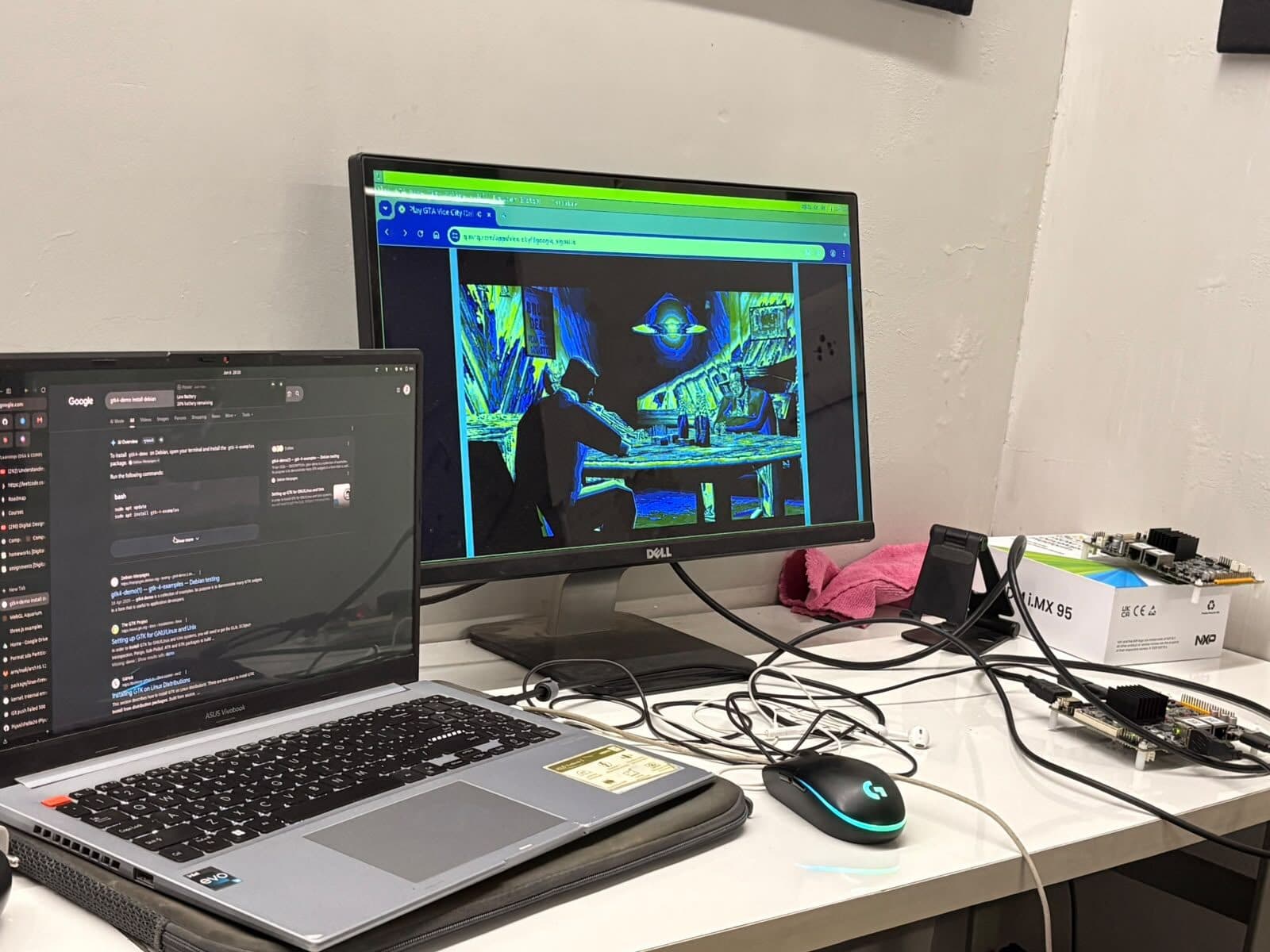
An NXP i.MX 95 evaluation board wired to a monitor showing a video frame with its colour channels wrong — greens and blues where the image should be natural.
i.MX95 bring-up. The display pipeline, mid-debug.
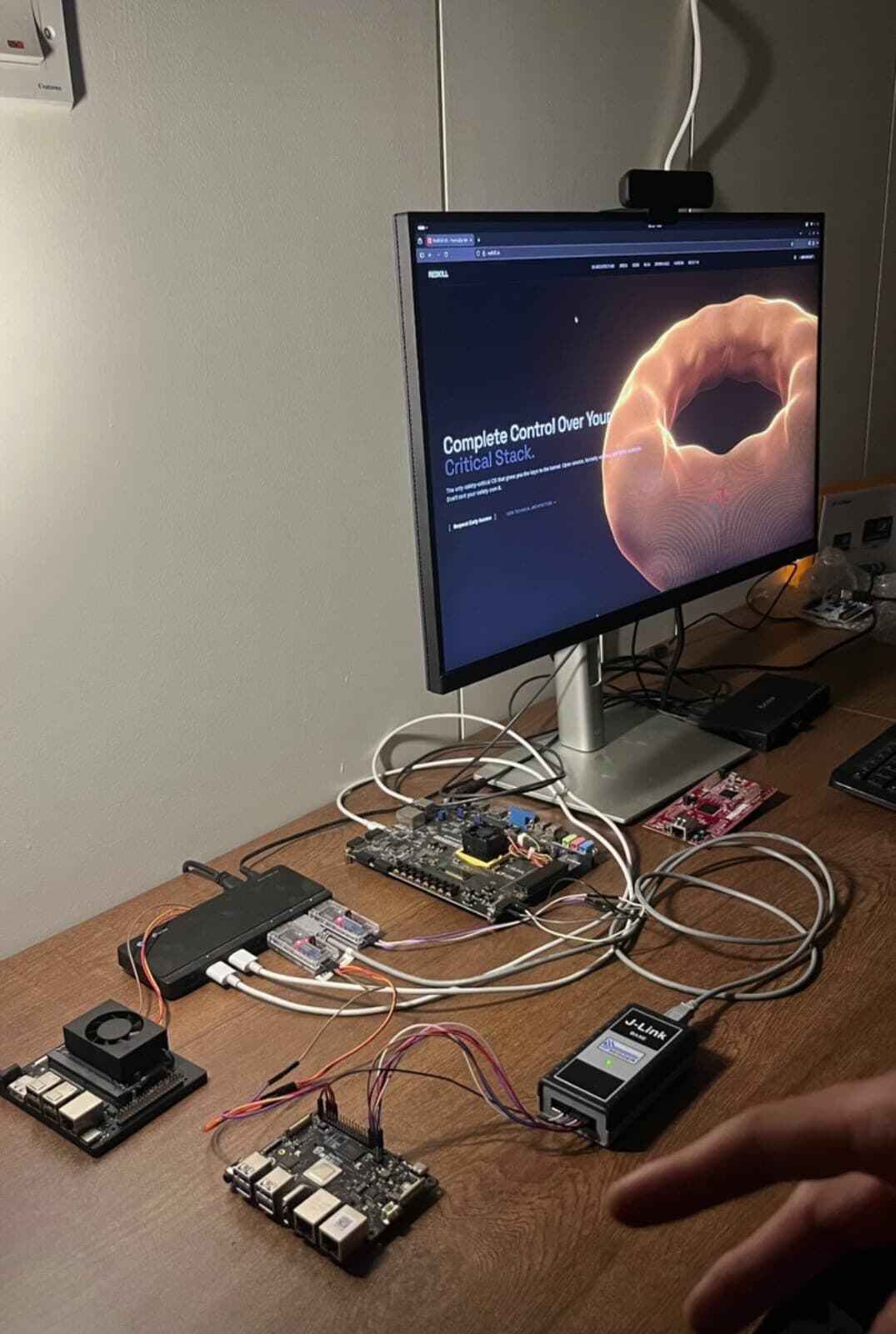
A desk with two single-board computers, a development board and a J-Link debug probe wired together, in front of a monitor showing the RedKill OS website.
Bring-up bench for a safety-critical RTOS.
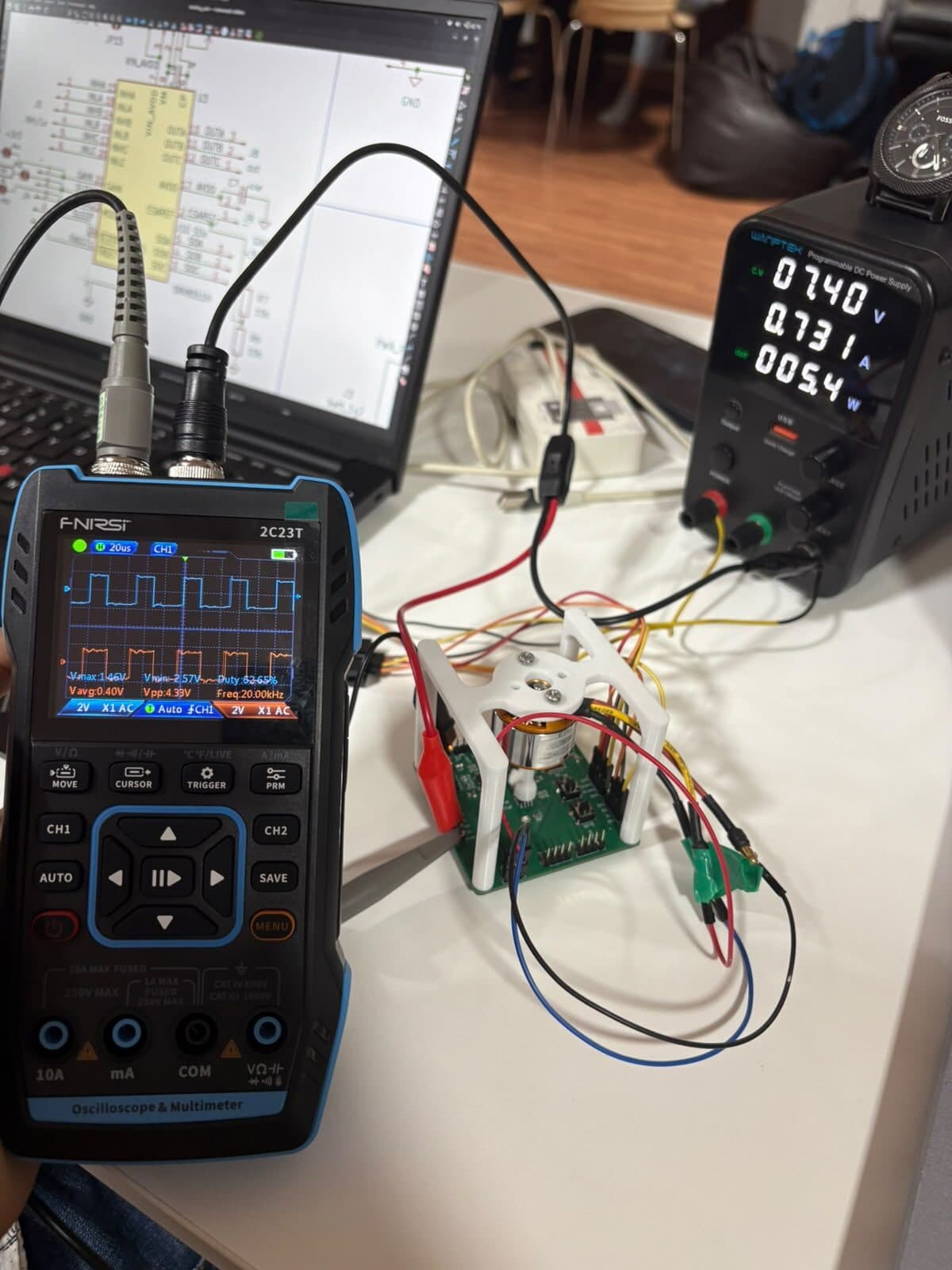
A handheld oscilloscope showing a 20 kHz PWM waveform, connected to a brushless motor on a driver board, with a bench power supply reading 7.40 volts and a schematic open on a laptop behind.
Gate drive on a scope, the schematic open behind it. Both, or neither.
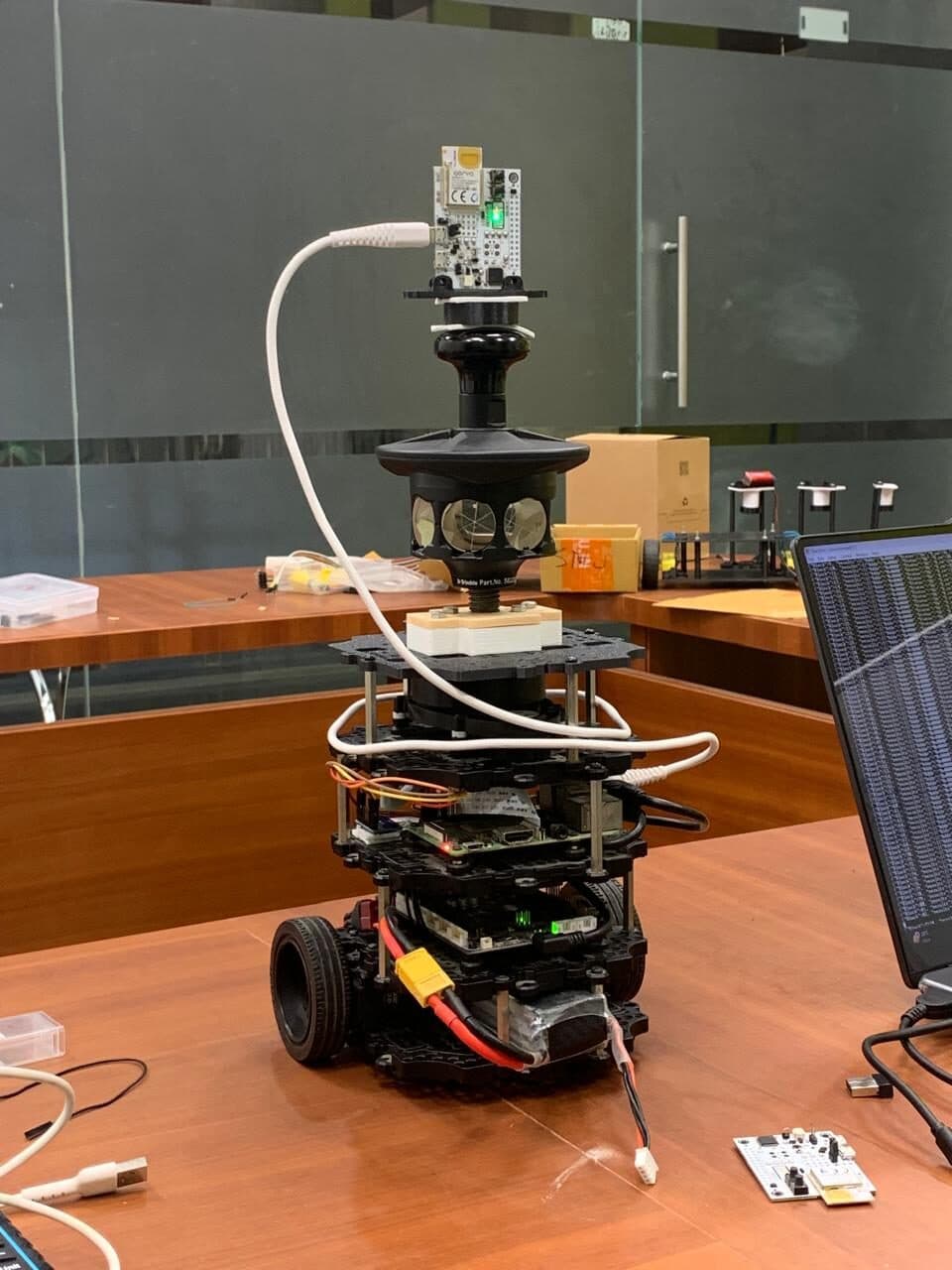
A small wheeled robot on a table carrying a stacked payload: compute boards on standoffs, a multi-lens sensor housing and a module on top.
Localization platform, on the bench.
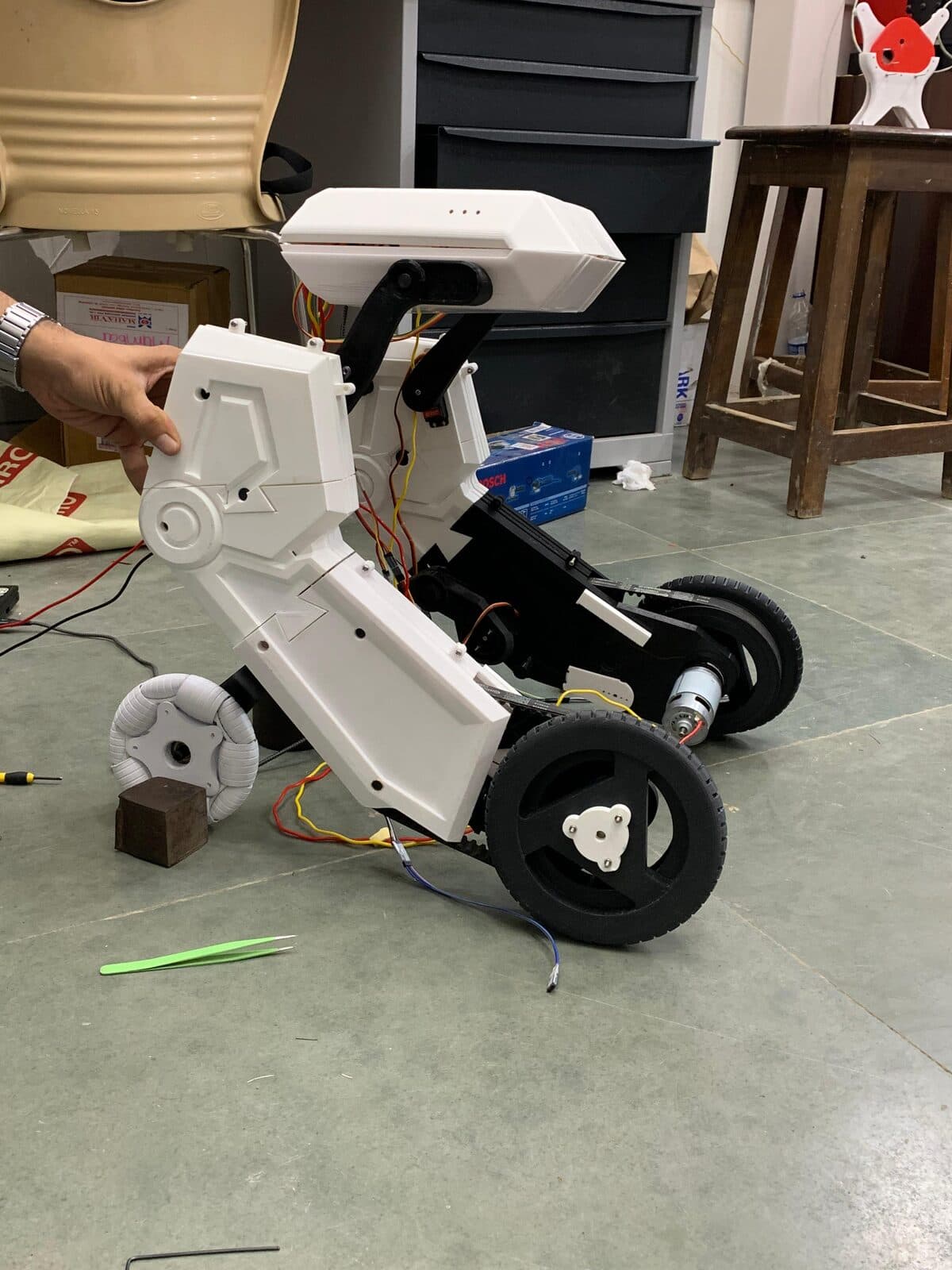
A half-scale assistive-mobility robot part-way through assembly on a workshop floor, its white shell open to show drive motors, belts and wiring.
The assistive-mobility prototype, mid-assembly.

Eyecandy Robotics

Two of us were on the early team, both working across robotics and electronics — custom boards, power, autonomy and control, through to a robot people could walk up to.

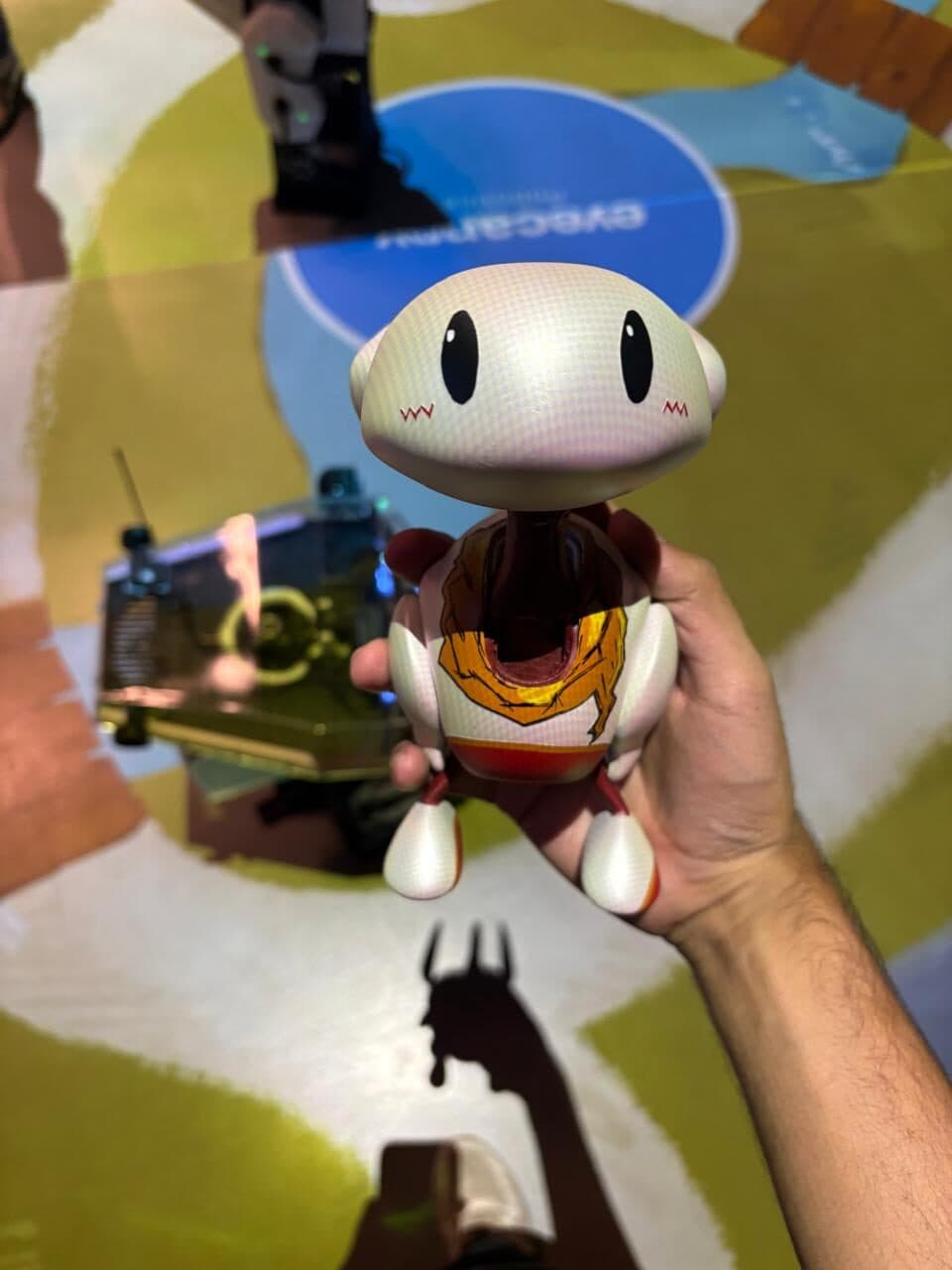
  • A small painted robot held in one hand above a printed floor graphic, with other robots out of focus behind it.
    Hand-painted, at the showcase.
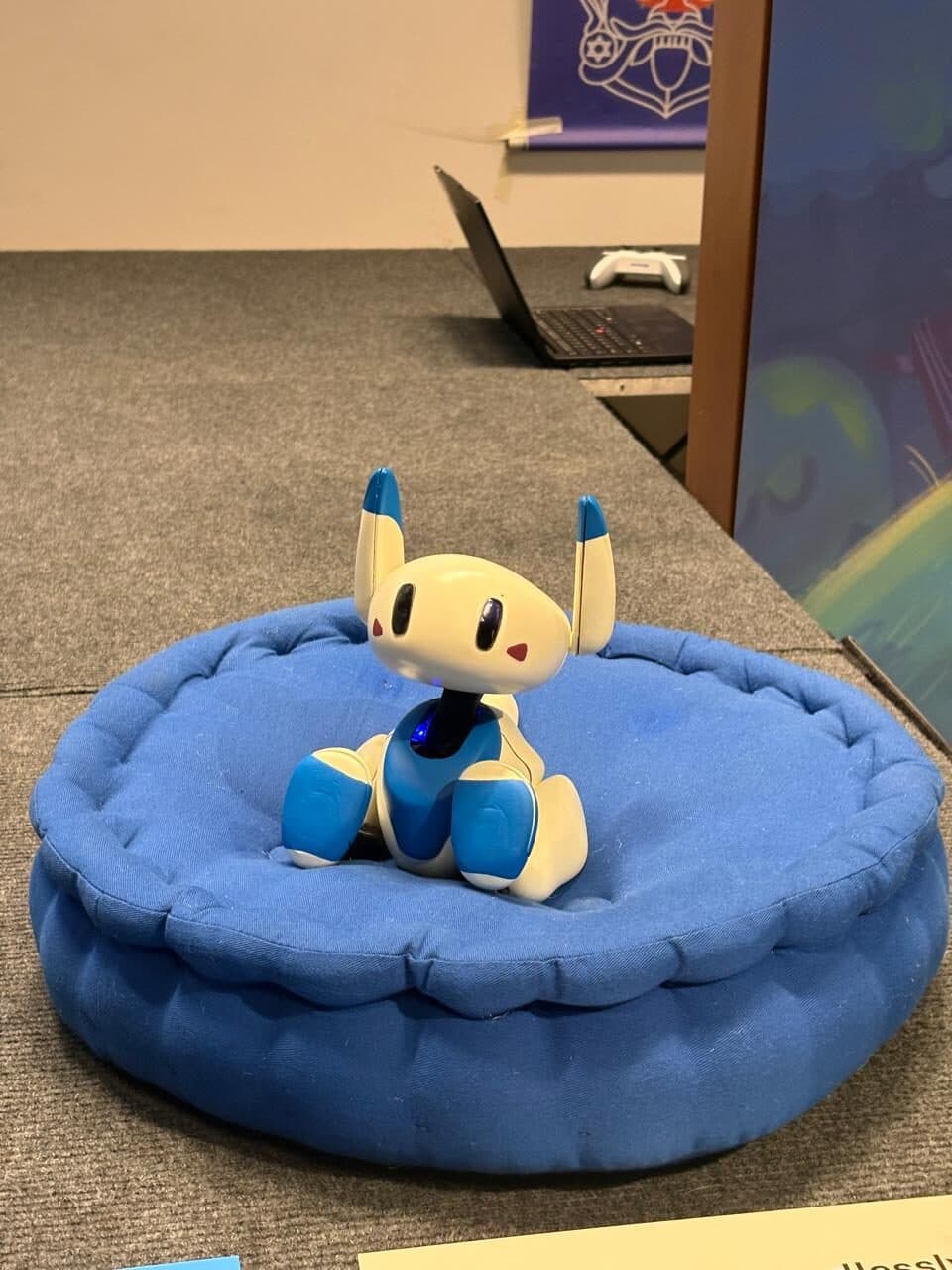
  • A small blue and white robot with tall ears sitting upright in a round fabric bed, on an exhibition floor.
    Idle, waiting to be spoken to.
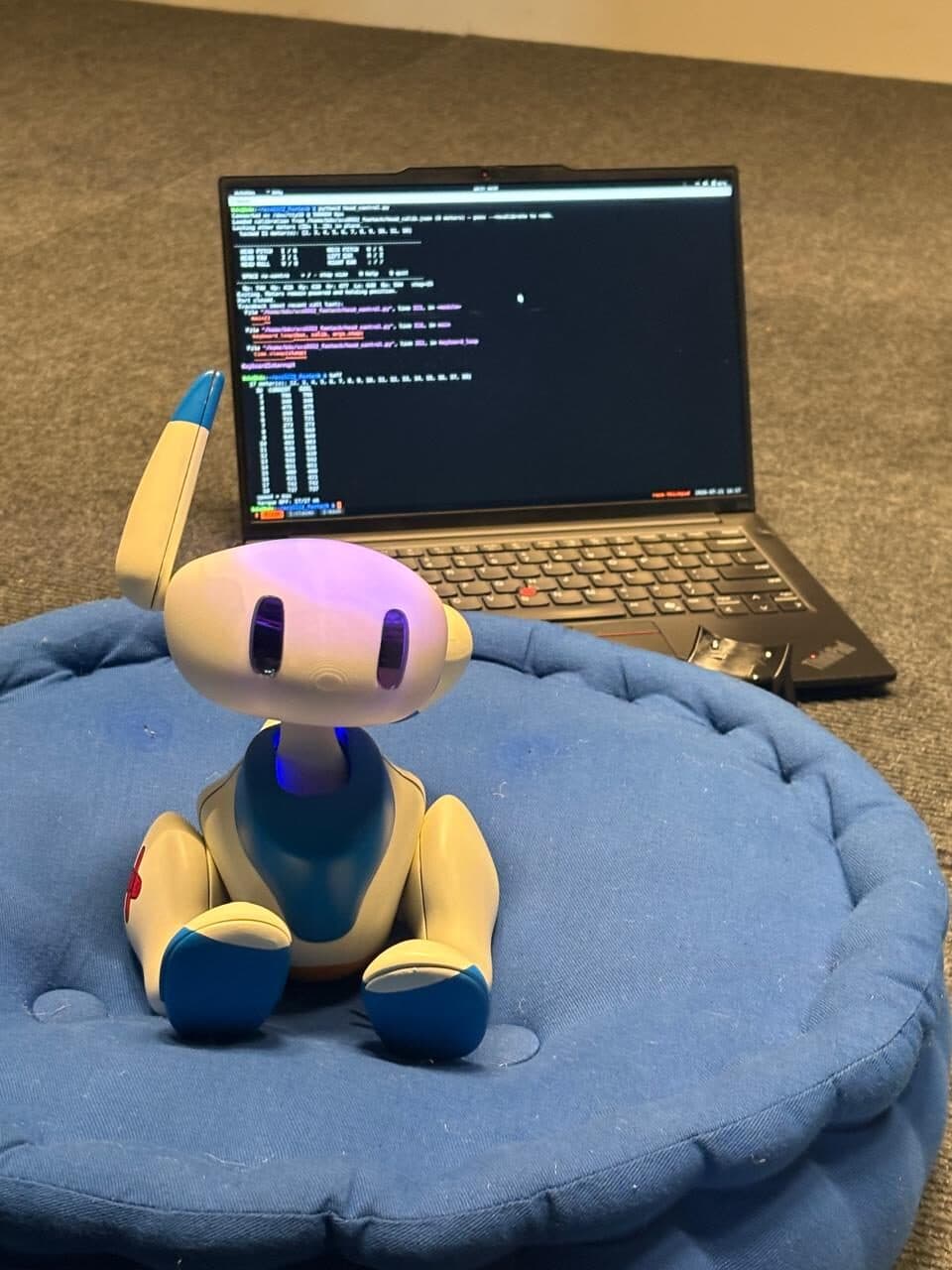
  • The same blue and white robot with one arm raised, sitting in front of a laptop showing a Python traceback in a terminal.
    One arm up, and a traceback on the laptop behind it.
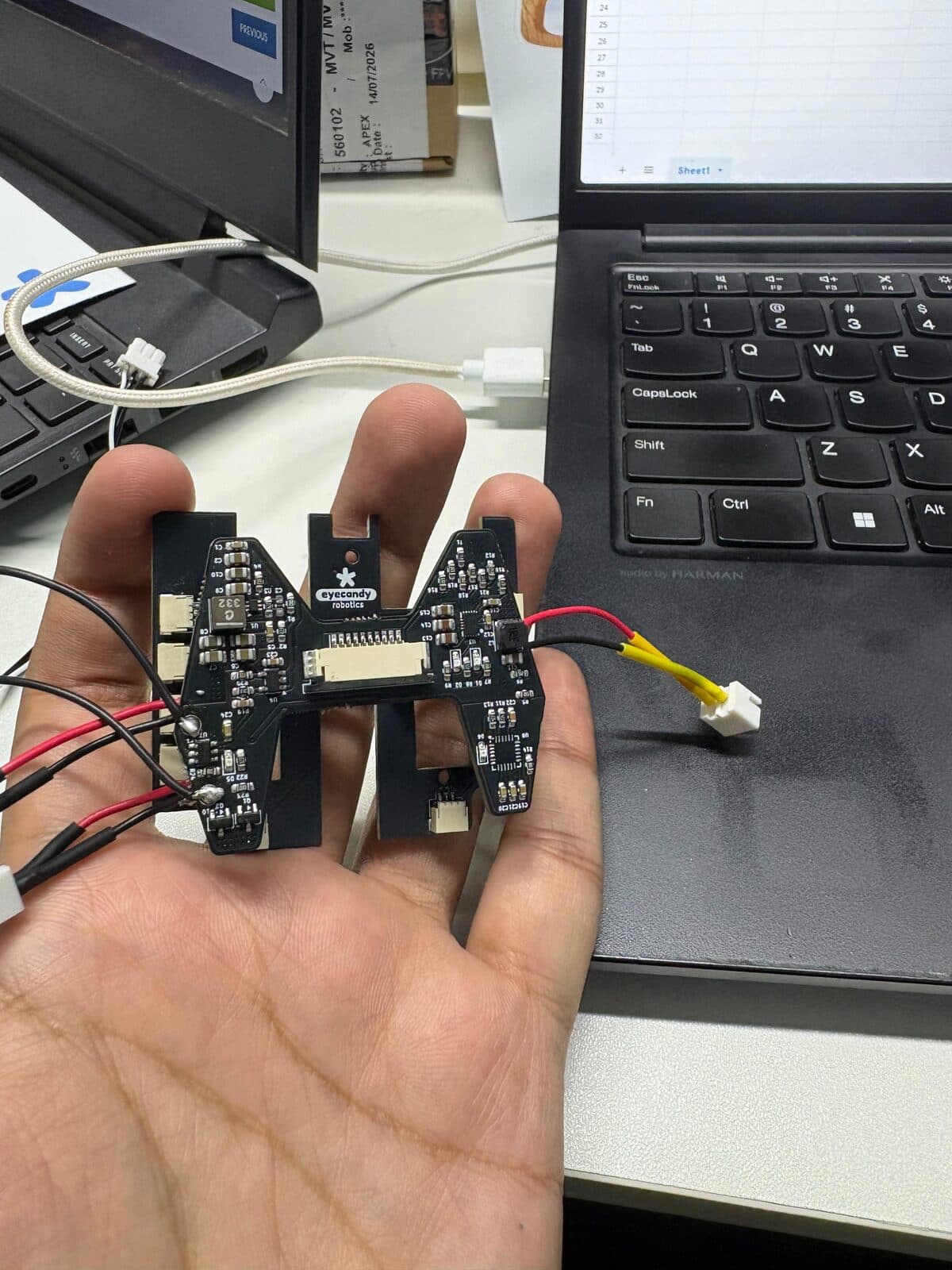
  • A small multi-board electronics assembly held in one hand, its four boards arranged around a central spine and wired to power and ribbon connectors.
    The board behind the robot.
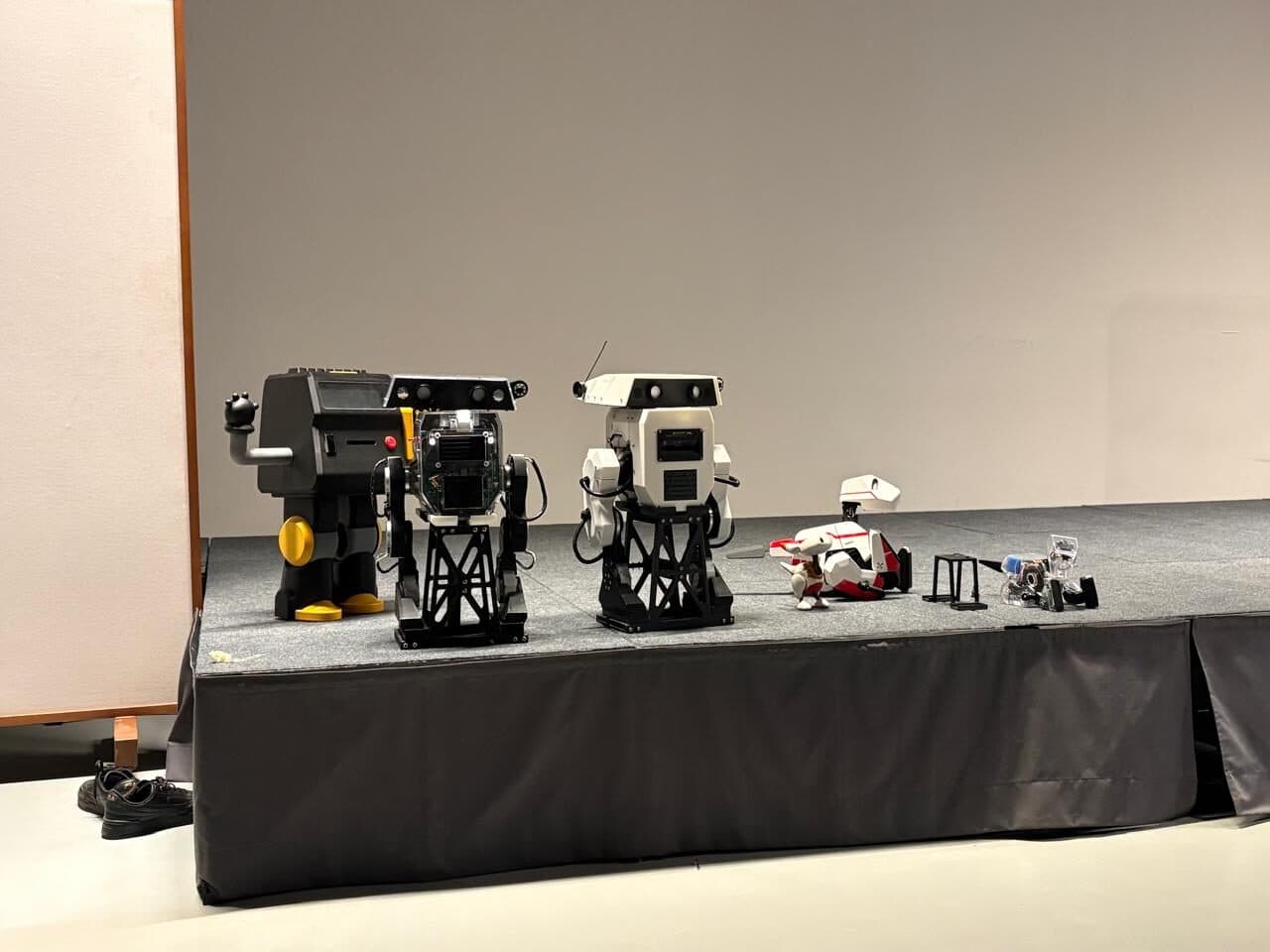
  • Four robots of different sizes lined up on a low stage at a public showcase.
    Eyecandy Robotics, shown publicly.
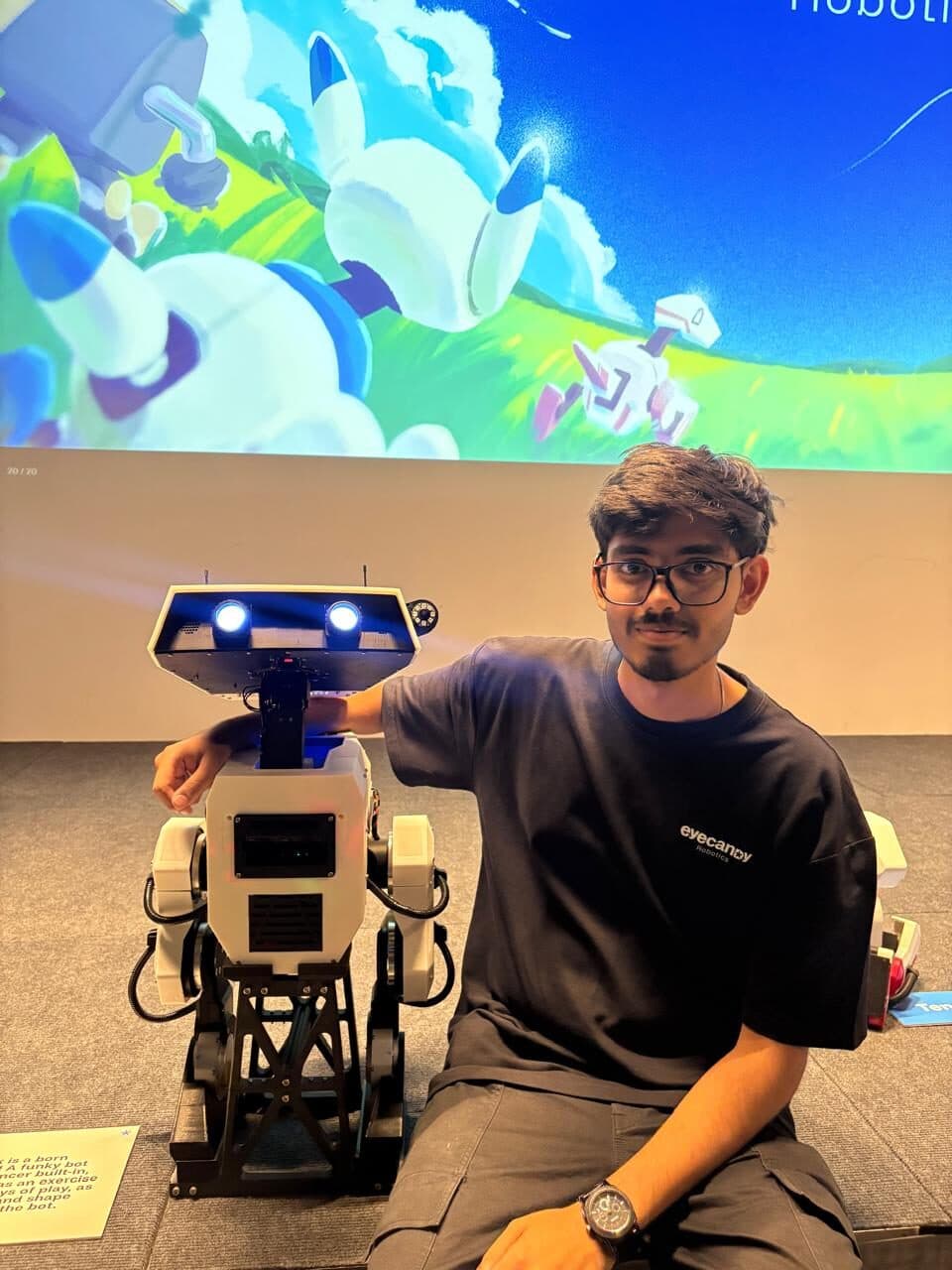
  • Kartikey Pathak kneeling beside a white humanoid robot at a public showcase, a projected slide behind him.
    Kartikey at the Eyecandy Robotics showcase.
Autonomy and control on an early-stage robot
Autonomy, control systems and platform bring-up on an early-stage consumer robot, carried through to a public showcase.
Custom Linux-capable SBC and power architecture
Electronics for an early-stage robot: a custom Linux-capable single-board computer, a multi-board architecture, mixed-signal audio, and power management across Li-ion and Li-Po with USB-C charging and protection.

How we work.

Kaspevo Labs is a young studio and we would rather say so than imply otherwise. The experience behind it comes from production electronics, open-source infrastructure, embedded Linux platforms and robotics systems — places where failure has consequences.

01

We work at the seams.

Hardware, firmware, Linux and autonomy fail at their boundaries. That is where we are useful.

02

We read the datasheet.

And the kernel log. And the schematic. Most integration bugs are already documented somewhere nobody looked.

03

We upstream what we can.

Where a fix belongs in the project rather than in your tree, we send it there. It survives the engagement that paid for it.

04

We measure, then claim.

Every number on this site has a source behind it. Where we don't have a figure, we don't invent one.

Tell us what isn't working.

Describe the failure, not the job spec. If we're the wrong team for it we'll tell you, and say who might be right.

Sound familiar

  • The board won't boot.
  • The camera pipeline panics the kernel.
  • The autonomy stack drifts.
  • The power budget doesn't close.
  • It works on the bench and dies in the field.

Email

contact@kaspevolabs.com
Location
Mumbai, India
Response
Within two working days